

Dowry abuse in Australia is written into family violence law. Here is what that means
From Heritage to Slow Fashion – The Rise of Handloom Sarees in Australia

Something is shifting in fashion, and it is not hard to spot. From the runways of Paris and Milan to the Instagram feeds of Melbourne’s most stylish Indian-Australian women, the handloom saree is having a real moment. More than a passing trend.
As fast fashion, synthetic fabrics and factory-line garments pile up, shoppers are asking harder questions. Where was this made? Who made it? What is it doing to the planet? More and more, the answer drawing attention is the handloom saree, in Australia and around the world.
For Indian-Australians, this runs deeper than fashion. It reads as a homecoming.
What Exactly Is a Handloom Saree?
First, the basics. A handloom saree is what it sounds like, a saree woven by hand on a traditional loom by a skilled artisan. No electricity. No mass-production shortcuts. Just the mechanical energy of a weaver’s hands and feet, threading one line after another into something remarkable.
Every region of India has its own weaving tradition, its own signature patterns, its own story worked into each border and pallu. Kanjivaram, or Kanchipuram, from Tamil Nadu is widely called the queen of silk sarees, known for lustrous threads and bold zari borders. Banarasi weaves from Varanasi, in Uttar Pradesh, are dense brocades with Persian-influenced motifs. Chanderi from Madhya Pradesh is feather-light, sheer and elegant. From West Bengal, the Jamdani is a delicate, almost translucent cotton weave with fine floral patterns. Pochampally Ikat from Telangana carries geometric dye-resist patterns with a distinct visual rhythm. Maheshwari, also from Madhya Pradesh, blends cotton and silk for everyday wear.
Each is a different story. Each carries the fingerprints of its maker.
So, Why Is the World Going Mad for Handloom Right Now?
The timing is no accident. Several global forces are pushing handloom textiles to the centre of the sustainability conversation.
Australia, and much of the world, is finally reckoning with the environmental cost of fast fashion. The industry ranks among the planet’s largest polluters, responsible for heavy water use, chemical waste and carbon emissions. As shoppers look for alternatives, handloom answers on most counts, natural fibres, low-energy production, no synthetic shortcuts, and garments built to last for decades.
What was once a niche idea among committed environmentalists has moved into the mainstream. Slow fashion, buying less, buying better and choosing pieces with provenance and purpose, lands with today’s conscious shoppers. Few garments carry that idea like a handloom saree that took weeks to weave.
The market tells the story plainly. The global handloom products market was valued at nearly USD $9 billion in 2025, and is projected to nearly double to more than USD $20 billion by 2034. Sarees alone account for more than 44 per cent of it. The growth is driven by shoppers who want sustainable, unique and culturally meaningful products, and who will pay for them.
Who benefits from the weave
One point often gets lost in the sustainability talk. Buying a handloom saree is not only good for the planet. It is good for people.
India’s handloom sector is the country’s second-largest employer after agriculture, supporting millions of weavers and their families, most of them in rural areas. Many of these artisans are women. Choosing a handloom saree over a machine-made copy supports that livelihood directly. It backs fair wages, the survival of a traditional craft, and economic dignity for weaving communities.
Some of the better Australian retailers buy handloom sarees straight from weavers, or through fair-trade cooperatives, cutting out the middlemen so more of the money reaches the hands that did the work.
Why it matters to Indian-Australians
For the Indian diaspora in Australia, the handloom saree means more than fashion or sustainability. It is a link to home. It is the fabric of festivals, weddings and family celebrations. It is what a grandmother wore. It is what a mother wore for her wedding photograph.
Living in Australia, far from family, moving between two cultures, many Indian-Australian women describe wearing a handloom saree as grounding. It is a literal thread back to heritage. The handloom moment is not only nostalgia, though. It is aspiration too. Younger Indian-Australian women are finding handloom for the first time, styling it with sneakers and crop blouses, draping it over jeans, folding it into everyday wardrobes in ways that feel modern and their own. The #SareeNotSorry movement on Instagram is a good place to watch that mix in action.
Where to Buy Handloom Sarees in Australia

There is no longer any need to wait for a trip to India to add an authentic handloom saree to an Australian wardrobe. Here is a guide to finding the real thing, online or in store.
Nadhi, based in Sydney and online, specialises in luxury Kanchipuram silk and handloom sarees, ethically sourced direct from weavers. Fabricoz carries a wide range of handloom styles with free shipping Australia-wide, a solid all-rounder for everyday browsing. For certified authenticity, IndyVogue, in Sydney and Melbourne, stocks Silk Mark certified Banarasi and Kanjivaram sarees, all verified genuine handloom. Valampuri, with boutiques in both Sydney and Melbourne, offers a well-curated range of sarees and ethnic wear for in-person shopping.
For online shoppers, BharatSthali sources directly from weavers in Kanchipuram and across India, shipping Maheshwari, Banarasi and raw-silk handlooms nationwide. Sunasa likewise ships handloom silk sarees straight from weavers to customers across Australia, from Sydney to Darwin.
Sarees Palace, in Sydney, covers everything from handloom cotton to Banarasi silk and contemporary styles. For designer handloom, think Raw Mango, Sabyasachi and Anita Dongre. Pernia’s Pop-Up Shop is the international platform that ships to Australia.
One note. Buying from India-based retailers means allowing for international shipping times and any duties. Delivery to Australia usually takes 7 to 14 business days. It is worth checking the ATO’s guidance on GST for overseas purchases over AUD $1,000.
Tips for Buying Authentic Handloom – Don’t Get Caught Out
As handloom grows in popularity, imitations are everywhere. The best starting point is the Silk Mark certification on silk sarees, the Indian government’s guarantee of genuine silk, along with the Handloom Mark, a certification run by India’s Ministry of Textiles that confirms a piece was truly hand-woven. Buy from retailers who can name the weaver’s region and technique. If they cannot, treat it as a warning sign.
A genuine handloom carries slight irregularities, tiny variations in the weave that mark the work of human hands. Weaving that looks too perfect and machine-consistent usually points to a powerloom copy. Natural-fibre sarees in cotton and silk feel different from synthetics. They breathe, they drape with real weight, and they improve with every wash. Ask about care before buying. A genuine handloom saree usually needs gentle hand-washing or dry cleaning.
How to Style a Handloom Saree the Modern Way
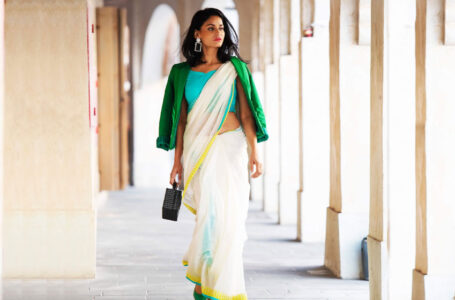
Sarees are no longer reserved for formal occasions or religious ceremonies. Indian-Australian women now wear handloom to brunches in Fitzroy, to the races at Flemington, to gallery openings in Surry Hills. A lightweight Chanderi or Maheshwari cotton saree with a simple fitted blouse and flat sandals works well for weekend outings. A few extra pleats add ease of movement.
For a mixed look, a saree drapes neatly over a plain white oversized shirt, or the blouse pairs with wide-leg trousers and the pallu carries as a shoulder wrap. Indian-Australian style bloggers are doing striking things at this meeting of cultures. The #HandloomSaree tag on Instagram is full of daily inspiration.
A crisp Kanjivaram in a neutral tone, with a structured blouse and block heels, reads as polished and professional. This is power dressing with roots. For Diwali, weddings and big occasions, a deep Banarasi silk or Pochampally Ikat in jewel tones, with statement gold jewellery, rarely misses.
The Bottom Line
The handloom saree is several things at once, a work of art, a piece of living cultural heritage, an ethical fashion choice, and a deeply personal expression of identity. As fast fashion draws more scrutiny for its environmental and human cost, handloom stands as a strong and beautiful alternative.
For Indian-Australians, choosing a handloom saree in Australia honours where a person comes from while standing in the values of where they live. It says something simple. A care for the planet, a care for the people who made it, and pride in a culture that created something this fine.
So the case for adding a handloom saree to a wardrobe is not that it is on trend. It is that it is timeless.